Winter Tyre Rules in Europe for UK Drivers
Published on: Saturday, 19 September 2026 | Author: Jessica Bird
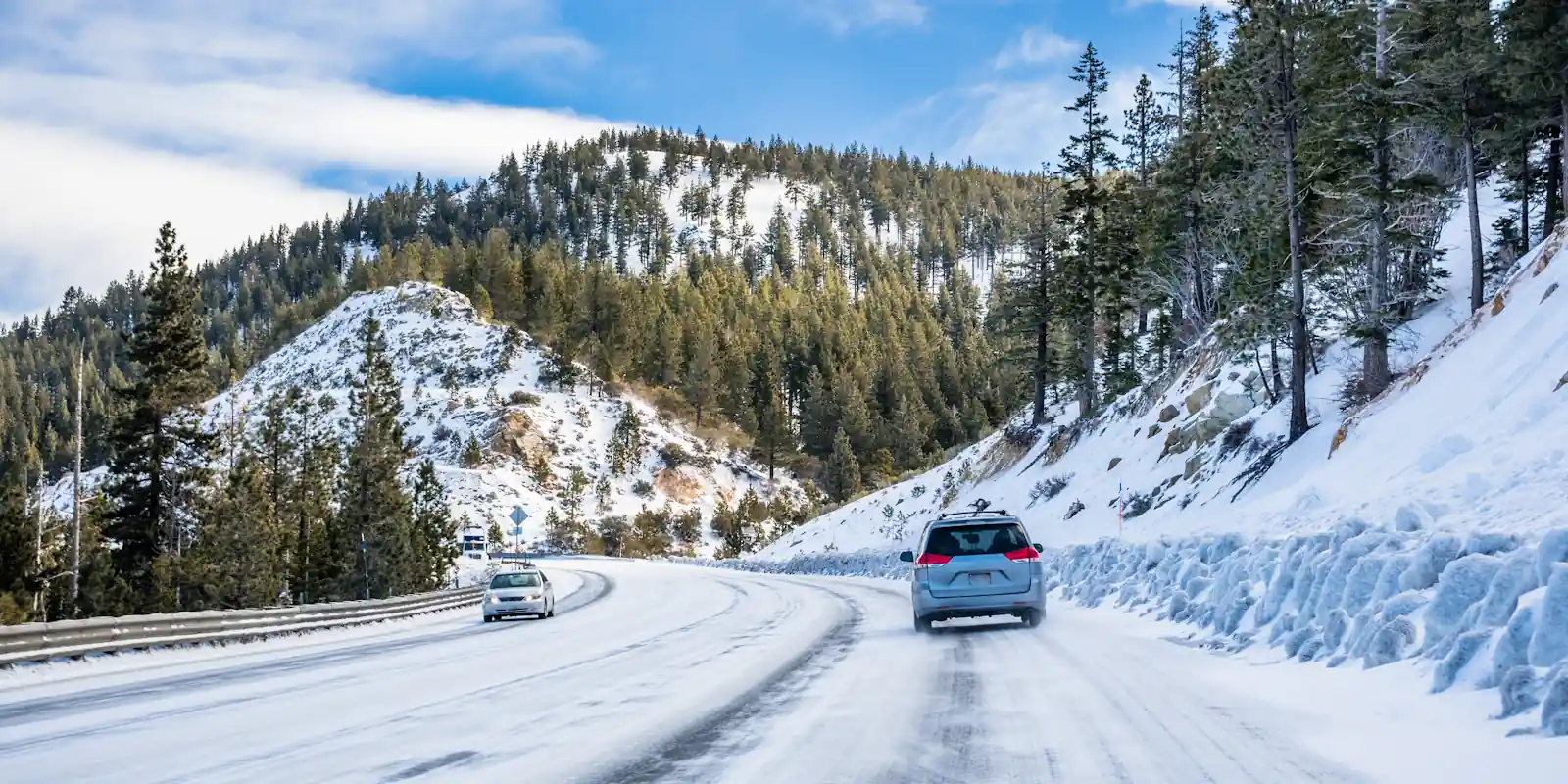
Planning a winter drive through Europe? Your tyres deserve just as much attention as your route.
Winter tyres are not a legal requirement in the UK, so it can be easy to assume the same rules apply once you cross the Channel. But they do not. Some European countries require winter-ready tyres whenever snow or ice appears, while others set specific dates or apply rules in certain regions.
That means a tyre setup that is perfectly legal at home may not meet the requirements elsewhere in Europe. Here is what UK motorists need to know before travelling.
What do the M+S and 3PMSF markings mean?
One of the easiest places to get caught out is the marking on the tyre itself.
The 3PMSF, or Three-Peak Mountain Snowflake, is the Alpine symbol showing a mountain with a snowflake inside it. This indicates that the tyre has met specific performance requirements in snowy conditions.
You may also see M+S, meaning Mud and Snow, on the sidewall. However, this marking alone is no longer accepted everywhere.
Germany is a good example. Since October 2024, to meet its winter-weather requirement tyres must carry the Alpine symbol. Older tyres marked only M+S no longer qualify.
France has also tightened its mountain-zone rules from November 2024. Where winter tyres are being used to meet the requirement, they need the Alpine symbol alongside an M+S marking.
However, the rules are not identical across Europe. Austria still recognises tyres carrying M+S, M.S., M&S or the snowflake symbol as winter tyres.
When do I need winter tyres in Europe?
The answer depends on where you’re driving. Here’s how the requirements differ across some of the most popular European destinations for UK motorists:
| Country: | Requirement: |
|---|---|
| Germany | Winter-ready tyres are compulsory on all wheels whenever roads are affected by snow, slush, ice or frost. There is no fixed date range, and qualifying tyres must carry the Alpine/3PMSF symbol. |
| France | From 1st November to 31st March, designated mountain areas require either four qualifying winter tyres or approved chains or snow socks for at least two driven wheels. The affected areas are signposted. |
| Austria | Between 1st November and 15th April, cars up to 3.5 tonnes need winter tyres on all wheels when roads are affected by snow, slush or ice. Snow chains can be used as an alternative in certain conditions. |
| Switzerland | Winter tyres are not legally compulsory nationwide. However, drivers can face consequences if unsuitable tyres contribute to an accident or cause them to obstruct a snow-covered road. |
| Italy | On roads where winter equipment is required, the usual period is 15th November to 15th April. Depending on the road, drivers may need suitable winter tyres or approved snow chains or snow socks. |
Rules can change, so confirm the official requirements for every country shortly before you travel.
Do European countries have different tread-depth rules?
Yes. Meeting the UK tread-depth requirement does not automatically mean your winter tyres comply everywhere else.
For cars in the UK, the legal minimum tread depth is 1.6mm across the central three-quarters of the tread and around the full circumference. Austria is stricter when a tyre is being used as a winter tyre. Radial winter tyres on cars up to 3.5 tonnes must have at least 4mm of tread. Below that, they no longer meet Austria’s winter-tyre requirement, even though the tyre may still be above the UK legal minimum.
Switzerland also has a legal minimum of 1.6mm, although around 4mm is recommended for winter tyres.
So, before a winter trip, tread depth needs to be considered alongside the requirements of the countries you will be driving through.
Could using the wrong tyres affect your insurance?
Potentially, although the consequences depend on the country, the circumstances of an incident, and your individual insurance policy.
Driving on summer tyres does not automatically invalidate a UK insurance policy. However, failing to meet local requirements or using tyres that are unsuitable for the conditions could affect how responsibility for an accident is assessed.
In Switzerland, for example, official guidance warns that where inappropriate tyres contribute to an accident, an insurer may reduce a payout or attempt to recover some of its costs.
It is also worth reviewing the terms of your UK motor insurance before travelling, particularly any conditions relating to driving abroad.
What should you check before driving to Europe in winter?
A few final checks can help make sure your tyres and winter equipment are ready for the journey:
- Countries on your route: Check the winter equipment rules for those you are passing through, as well as your destination.
- Tyre markings: Make sure your tyres meet any 3PMSF or other local requirements.
- Tread depth: Use the minimum required in the countries you will visit, rather than relying solely on the UK limit.
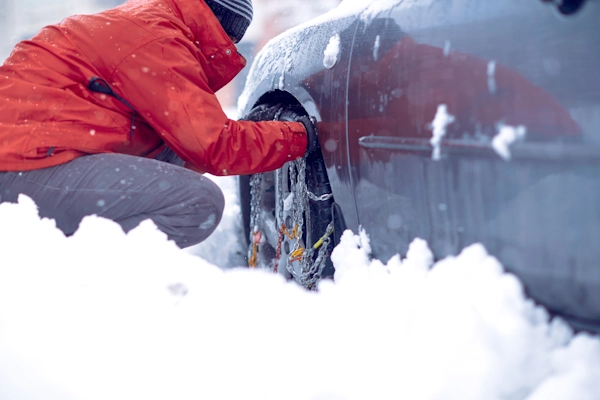
- Snow chains or snow socks: Some routes require them or expect you to carry them.
- Tyre pressure and condition: Look for cuts, cracking, bulges and uneven tyre wear before a long journey.
Preparing at home is much easier than discovering your tyres or winter equipment do not meet local requirements once you are already abroad.
Get ready for your European winter drive with Tyre Pros
If you are unsure whether your tyres are ready for a winter trip abroad, book a free tyre check at your local Tyre Pros centre.
Our technicians can inspect the tread, sidewalls and overall condition of your tyres, and advise if replacements may be needed before your journey.